
Key Priorities
Engaged Residents Drive Neighborhood Change
Residents need to be heard. The community fabric of Palo Alto is woven together by our many diverse neighborhoods.
Be Engaged
Resident engagement is critical to maintaining the quality of life and deepening relationships with neighbors. In my neighborhood this includes summer block parties, pop-up driveway parties, and organized programs like Cool Block and Emergency Prep.Be Heard
When there is potential change on the horizon, residents should be the first voices heard. Often it seems the city doesn’t really hear the people who live here every day. So real needs are not incorporated in action plans for changes. Active, engaged neighbors can change this.
“Ed has been totally committed to serving our city for decades. I worked with Ed when he was President of a non-profit board and saw how effective he was leading people with major differences get to successful outcomes. As one of only two women on the board, I was always impressed that Ed made sure all voices were heard. This is the kind of leader we need as a city council member.”
Kathleen Foley-Hughes
Founder, Ada’s Cafe
Change in Existing Neighborhoods
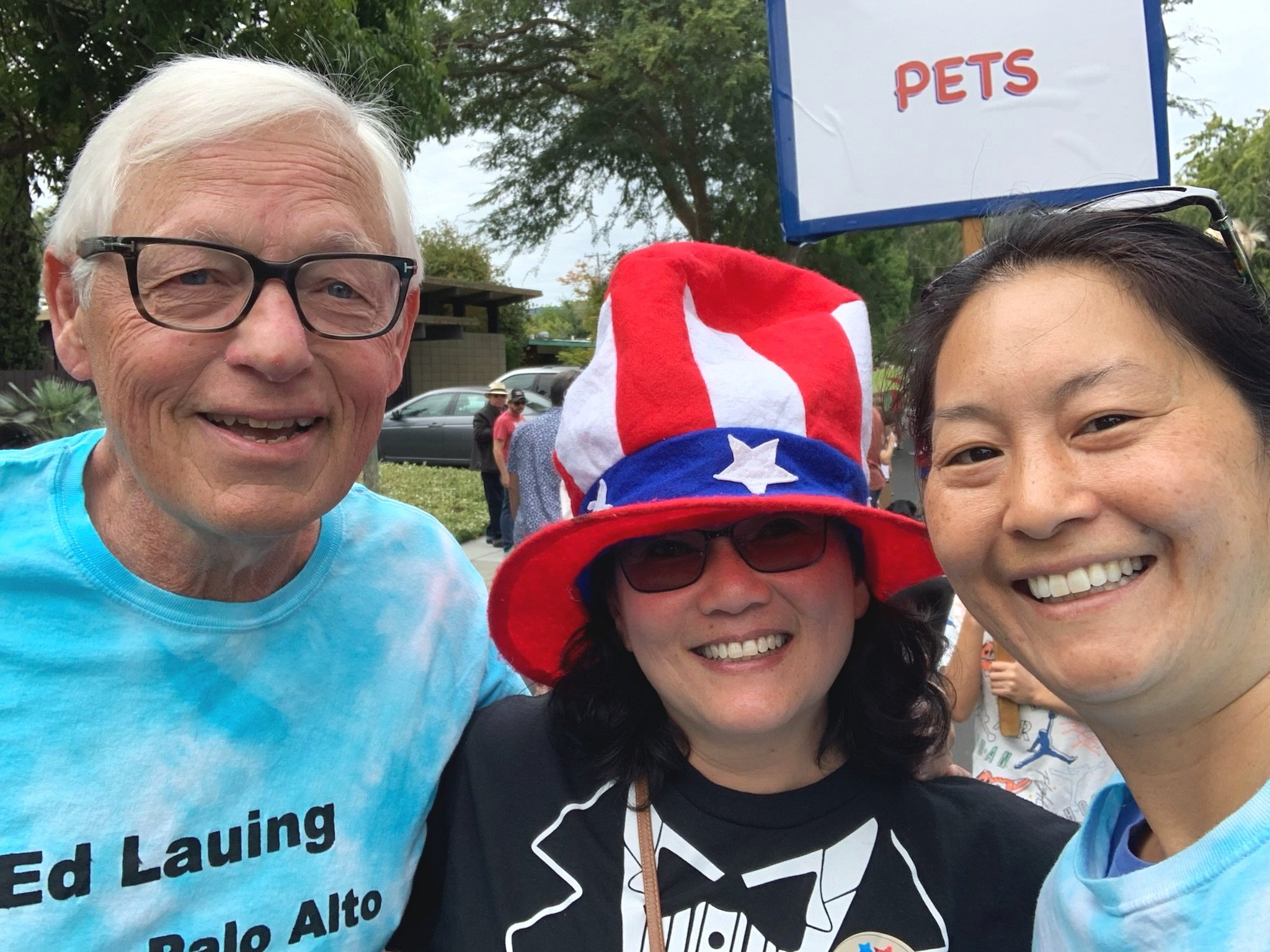
Marching in the Greenmeadow Fourth of July Celebration with Vice Mayor Lydia Kou and Commissioner Bryna Chang
Whether it is a new parking permit program in Old Palo Alto, a major project re-visioning Ventura, or bike boulevard changes, local residents MUST be consulted – AND LISTENED TO - on what they like about the neighborhood and what kinds of changes would further enhance living here. Meaningful community engagement should not be a check-the-box activity. Stakeholder priorities must be clearly reflected in city planning and decision-making.
Planning should be deliberate, not ad hoc. This year, I led an initiative on the Planning Commission to develop a “master plan” framework on which to model change in current neighborhoods. Key components may include parks, accessible retail, community gathering spaces, pedestrian and bike paths, and a fair balance of residential diversity and commercial uses as appropriate by neighborhood.
If we don’t have a deliberate plan, we may not like the results!
New Neighborhoods
As the city executes on its new housing allocation over the next 10 years, we will likely be creating entirely new neighborhoods in areas that currently have no housing. This effort needs true urban planning. We need developers to build housing, but we need a vision of what the ideal neighborhood looks like as the basis for developer conversations. The same components of the existing neighborhood framework should be considered in any new neighborhood planning.