
Key Priorities
Plan for Housing Needs
But the State of California has changed the scale now required for housing in each community. Every eight years the state dictates a housing quota for each city. It is called RHNA – the Regional Housing Needs Allocation. Palo Alto has been given a quota of 6,086 new housing units between 2023-2031! That vastly exceeds our prior cycle quotas and is a 20% increase over our current housing inventory.
Almost 3,500 of these new units are moderate income down to very low-income levels. These are very difficult to fund based on developer required return on investment for projects. And they are the most needed in Palo Alto. Overall, this assignment is a very heavy lift for the city, but that is our assignment from the state. If we do not meet these quotas, Palo Alto can suffer penalties and risk losing more local control over development standards. (Since May, 2021, I have served as Co-Chair the 20-member Housing Element Working Group to recommend an action plan on housing*).
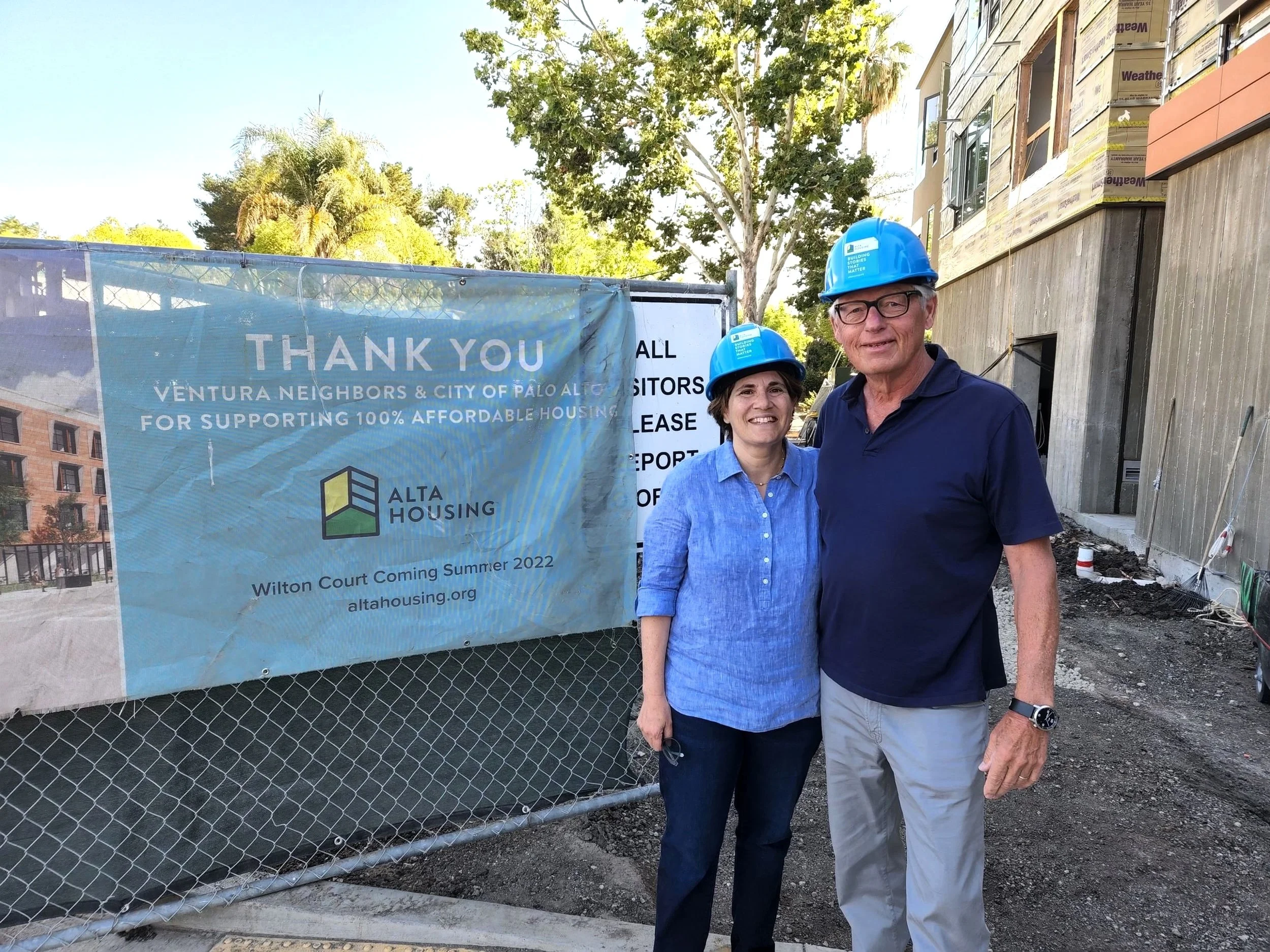
Ed and Sheryl Klein inspect affordable housing project Wilton Court as it nears completion
To encourage social and economic diversity in our town, I will find ways to fund below-market-rate (BMR) housing. This is a core value of Palo Alto. But it is also much more difficult to fund than market-rate homes. Developers just don’t make as much money on affordable units, so outside funding is absolutely required. So far, the state is not providing it.
We need to make this happen by creatively and exhaustively exploring every option for BMR funding – public and private. We also need to provide levers that make housing more attractive than office construction. The financial model and zoning strategies must incent developers to build the kind of housing we choose to prioritize or it won’t get built.
We can’t control what Sacramento does, but we can do a better job of structuring our own incentives to prioritize what we need most in Palo Alto and to meet our RHNA quotas. This will help keep Sacramento in Sacramento.
*Co-Chair of our New Housing Element Working Group
Every eight years, the state requires a new Housing Element as part of every city’s Comprehensive Plan. The complex process for creating the new Housing Element and submitting it to the state for certification is now underway for the 2023-2031 Cycle. The group, created by City Council, is made up of community members from all demographics and perspectives in the city in order to get broad input on how to plan for future housing. Our goals include identifying enough buildable sites and creating programs to make sure our Element is certified by the state and housing gets built.
Align housing types with community needs
The state housing mandates focus on total “housing units,” which can create a perverse incentive for cities and developers to optimize for a big volume of tiny units to meet these quotas.
This is wrong. Our plan has to be for ALL household types in Palo Alto.
We must ensure we build an assortment of housing types, from small units to larger family units. We also need housing that works for seniors and folks with special needs. In short, we need to create housing inventory segments that provide a migration path for residents from a first affordable apartment in Palo Alto up to retirement living. This goal will require Council to keep a close eye on the projects they approve over the years to make certain we are providing for all segments, not just putting up studio apartments to make state quotas.
As we plan for new housing, we need to focus on truly affordable housing so we can welcome new neighbors who will increase our social and economic diversity.